

High Engine Exhaust Gas Temperature: 5 Areas to Check on a Marine Diesel Engine
During normal vessel operation, engine parameters are continuously monitored by the crew.
Most of the time, the readings remain within their expected range.
Then one day, something changes.
One cylinder begins showing a higher exhaust gas temperature than the others. Or perhaps the overall exhaust temperature has gradually increased over time.
It may not immediately cause an engine shutdown. But it is a condition that should not simply be ignored.
For both Main Engines and Auxiliary Engines, an abnormal exhaust gas temperature can be an important warning sign that something within the combustion, air, turbocharging, cooling or mechanical systems requires investigation.
A high temperature reading is not a diagnosis by itself. The important question is:
What is causing the temperature to increase?
Below are five areas that can be considered during troubleshooting and inspection.
1️⃣ Fuel System
Fuel injection has a direct influence on how efficiently combustion takes place inside the cylinder.
The fuel system should therefore be one of the first areas considered when exhaust gas temperature becomes abnormal.
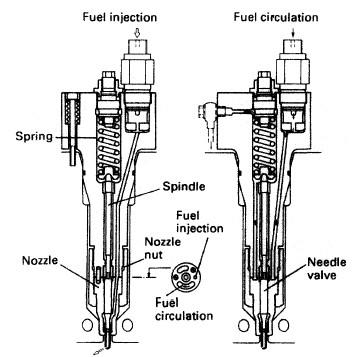
Areas that may require inspection include:
- Fuel injector condition
- Fuel injection timing
- Fuel pump performance
- Fuel atomisation
- Fuel quality
A fuel injector that is not performing correctly can affect the quantity, timing or spray pattern of fuel entering the combustion chamber. This can influence combustion quality and engine performance.
Proper maintenance of fuel injection equipment is important because it affects engine performance, fuel consumption, emissions and cylinder condition.
The objective is not simply to replace a component, but to understand whether the fuel system is contributing to the abnormal temperature.
2️⃣ Air Supply
A diesel engine needs sufficient air for efficient combustion.
If the engine is not receiving the required amount of air, combustion conditions can change and exhaust temperatures may increase.
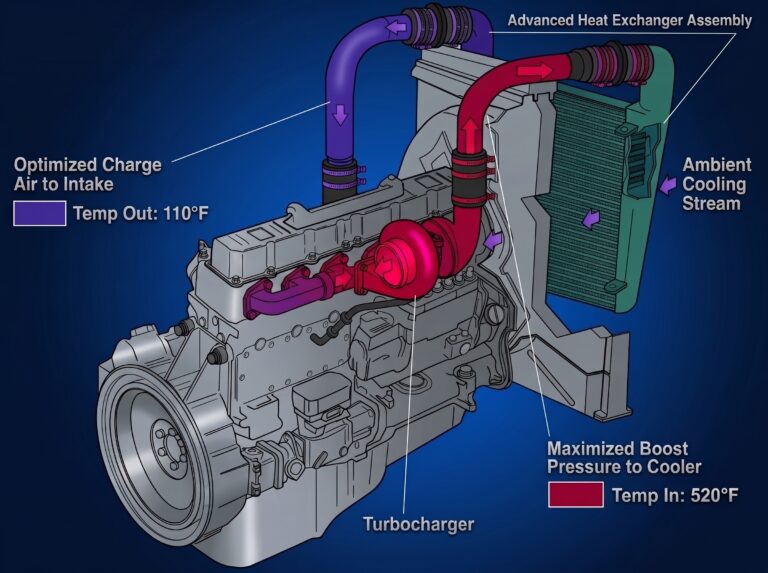
Areas to investigate can include:
- Air filter or intake restriction
- Charge air pressure
- Charge air cooler condition
- Air leakage
- Air intake system condition
The charge air cooler is particularly important because it helps reduce the temperature of compressed air before it enters the engine. Fouling or restricted airflow can affect charge-air conditions and engine performance.
For troubleshooting, engineers should look at the complete air path rather than focusing on only one component.
3️⃣ Turbocharger
The turbocharger plays a major role in supplying the engine with compressed air.
When turbocharger performance deteriorates, the engine may not receive the air required for efficient combustion.
One condition worth investigating is carbon or deposit build up around the turbine and nozzle ring.
Over time, deposits can accumulate in the gas path and affect the flow of exhaust gas through the turbine.
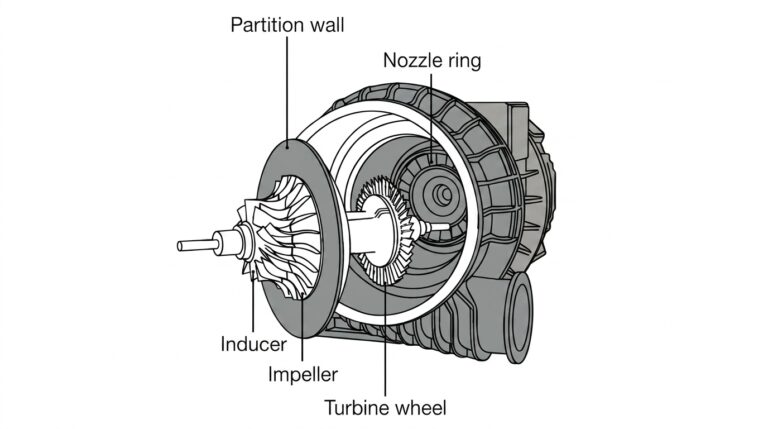
This can contribute to:
- Reduced turbocharger efficiency
- Lower charge-air pressure
- Poorer combustion conditions
- Higher exhaust gas temperature
The nozzle ring is an important component of the turbine stage because it controls and directs exhaust gas flow toward the turbine wheel.
Turbocharger condition therefore deserves particular attention when abnormal exhaust temperatures are observed. MAN’s marine service information also specifically includes guidance relating to high exhaust gas temperatures and turbine cleaning.
Proper inspection and cleaning should always follow the applicable engine and turbocharger manufacturer’s procedures.
4️⃣ Cooling & Lubrication System
High exhaust gas temperature is not necessarily caused by fuel or air supply alone.
The engine’s cooling and lubrication systems should also be considered.
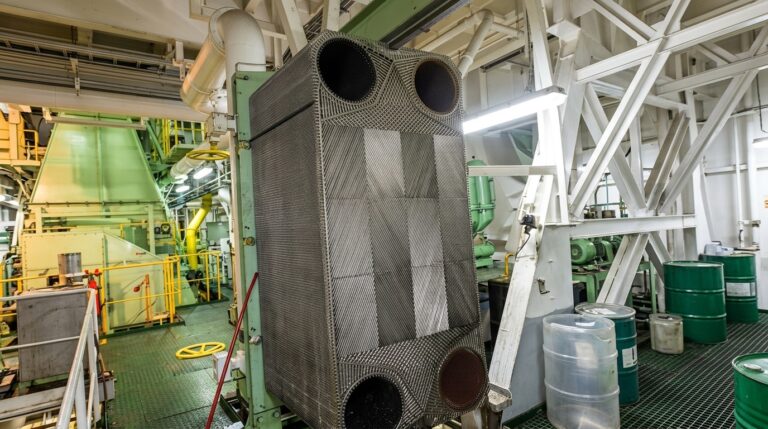
Depending on the engine design, inspection may include:
- Cooling water temperature and flow
- Lubricating oil condition
- Lubricating oil pressure
- Heat exchanger condition
- Signs of fouling or restricted flow
The cooling system helps control the temperature of critical engine components, while the lubrication system provides the necessary oil film between moving surfaces.
A problem in either system can affect engine operating conditions and component reliability.
For this reason, abnormal temperature readings should be considered together with other engine parameters rather than viewed in isolation.
5️⃣ Piston & Cylinder Liner
If one cylinder continues to show an abnormal exhaust temperature, the internal condition of the cylinder should also be considered.
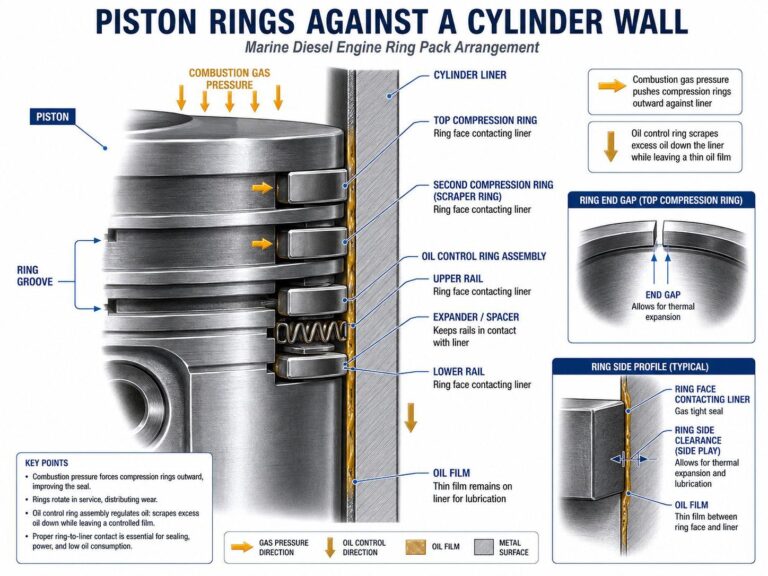
Potential areas include:
- Worn piston rings
- Broken or damaged piston rings
- Excessive cylinder liner wear
- Oversized or worn cylinder liner
- Excessive clearance
- Poor sealing between piston rings and liner
The piston rings must maintain an effective seal against the cylinder liner during operation. The cylinder liner provides the working surface for the piston and rings while also contributing to heat transfer and lubrication.
If the piston ring and liner condition deteriorates, combustion sealing and engine performance can be affected.
MAN’s marine service information specifically includes monitoring of piston ring and cylinder liner wear, highlighting the importance of these components in engine condition monitoring.
Don't Just Look at the Temperature - Look at the Trend
An exhaust gas temperature reading is an important monitoring parameter, but the number itself does not tell the complete story.
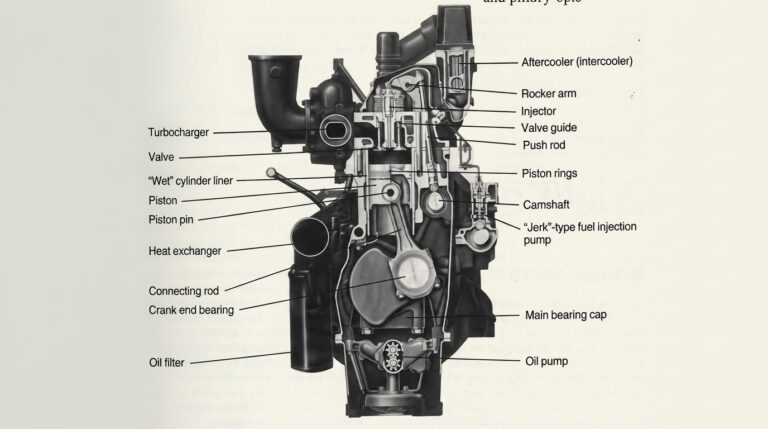
Engineers should consider:
- Is one cylinder significantly different from the others?
- Has the temperature gradually increased?
- Does the temperature change with engine load?
- Are charge-air pressure and temperature normal?
- Are fuel and lubrication parameters within expected limits?
- Are there other abnormal engine indications?
The Importance of Early Investigation
A high exhaust gas temperature does not automatically mean that a major engine failure is about to occur.
However, it is a condition that deserves attention.
The underlying cause could be related to the:
Fuel System ➡️ Air Supply ➡️ Turbocharger ➡️ Cooling & Lubrication ➡️ Piston & Cylinder Liner
There may also be more than one contributing factor.
The key is to identify the abnormal condition early, investigate the root cause and determine the appropriate maintenance action before the condition develops into a larger operational problem.
Marine Engine MRO Support
At Wheel & Loads Engineering, we understand that vessel maintenance is not only about repairing equipment after failure.
Effective MRO is also about inspection, troubleshooting, preventive maintenance and timely intervention.
Our marine engineering support includes engine inspection and maintenance, machinery troubleshooting, turbocharger-related services and other MRO activities for vessels operating in Malaysian waters.
Because sometimes, the first indication of a developing engine problem is simply a temperature that doesn’t look quite right.
Monitor the warning. Investigate the cause. Maintain the machinery. Keep the vessel moving.
- Inside Petlog Yard, Gelang Patah, Johor.
- 24/7/365 Emergency Support.